Showing posts with label movies. Show all posts

Sunday, April 29, 2012

Visual Literacy in My Life-Today

http://tinyurl.com/6r836pr
On the first day of Visual Literacy class, Magda talked about "making the invisible visible." Coming into VL, I thought we would be learning about art, about using visuals in the classroom and not really delving into perception and aesthetics as much as we did. I also didn't think of how impactful a lot of the activities would be, or how the movies would make me go AHA! But now, thinking back over the course of our class's experience this semester, I realize that I have learned a lot. Much of the "invisble" has become visible to me.

Aristotelian Aesthetics
I have learned to challenge my judgments, to look past face value and to consider how an object fits into the grander "scheme of things." Everything and everyone in our world is connected (something I learned from Crash), and we have to think about how the way we choose to represent ourselves, and our ideas, may affect others and our world. I also came to understand my own perception, and how perception is SO prominent in the media, advertising and in communication in general. Everyone has their own schema, and each individual's perception determines how he or she interprets a visual. When designing visuals, it is important to consider how the way you choose to represent something might affect different people. I got really interested into perceptual aesthetics during the course of our class, and I will use this new knowledge in my future classroom. Aesthetics is a very puzzling category of philosophy and visual studies, and I am very interested in learning more about this field, especially Aristotelian Aesthetic theory.

The movies and our class discussion was another favorite part of Visual Literacy this semester. Everyone in the class had a different perspective to offer when considering issues and visual theories that we encountered. Now when I watch commercials, I always think of Jean Kilbourn's Killing Us Softly, and I am shocked at how many ads contain subtle messages within the visual choices they make. Thinking about this fact, I wonder how I represent myself with my actions and body language. Non-verbal language, and visuals, say so much MORE than words. You know that phrase "actions speak louder than words,"? Well, it is incredibly true, and now more than ever I am tuned into the way visuals communicate in our society.

I had a great time in Visual Literacy this semester, and I will be able to use my knowledge in my future classroom. I just designed a teaching unit focused on Chaucer's The Canterbury Tales. I included an activity that was exclusively about using the visual communicative power of woodcuts in conveying a story. Students have to view different pictures, without seeing the accompanying words, and determine what is happening in the plot. There are lots of resources available out there for connecting medieval literature with art. Thanks to visual literacy, I know I will be more prepared to help students "make the invisible visible," and find deeper meaning from their classroom activities. I want them to look twice, at everything they encounter. Maybe they'll become a famous artist or filmmaker someday, and they can say, "my high school English teacher challenged me to do this." I would be so proud :)


Thursday, April 26, 2012

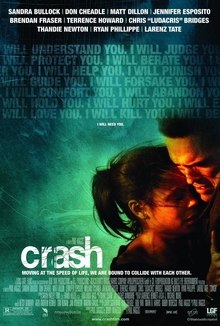
Crash Movie Review

"It's the sense of touch. In any real city, you walk, you know? You brush past people, people bump into you. In L.A., nobody touches you. We're always behind this metal and glass. I think we miss that touch so much, that we crash into each other, just so we can feel something." With these words, Don Cheadle's character Graham Waters opens Crash. When I first heard about Crash, I didn't expect it to be about race and perception. I thought it was a movie about cars! But after watching, I realized that the issues contained in the film are more real than I ever thought them to be before.


1. I think the director's message is simple: there is racism and prejudice hidden in the most unexpected of places. Unfortunately, though our world is continually becoming more global and diverse, there are individuals who are resistant to the harmony that our world hopes to achieve. Through exposing how race seems to be such a sensitive issue, and how people often aren't what they seem, I think the director really wanted to emphasize how sometimes we bring these issues to light, just so we can feel human. Just so we can understand that everyone has similar needs, wants and feelings, no matter what we look like.

2. I think that the movie has depictions of minorities that promote the message of the movie. There are very obvious instances of stereotypes that exist within the film, including Sandra Bullock's character, the white, racist woman, as well as the two African American men who are depicted as "tough" and steal a car, the Persian man who is angry, and the white gun shop owner who distrusts him. Several other depictions feel earnest, including Don Cheadle's character Graham Waters and his partner, Ria. The whole movie is organized around individuals applying stereotypes towards others. To support the director's intended message, that we are all interwoven without even realizing it, and we often "crash" into people we don't expect to, I think the minorities were situational.

3. I think the director's professional and educational background played a role in directing Crash. Since this film has kind of a subtle message, and presents it in an artistic way. Paul Haggis was very influenced by the films of Alfred Hitchcock and Jean-Luc Godard, both notorious for creating iconic, striking films. I think that Crash falls into a similar category. It is memorable, and deals with serious issues in a dynamic, yet subtle way.

4. I would hope that individuals watching this film would understand its message of inter-woven lives, and not be offended by the medium and characters used to convey it. However, I think that African Americans, people from the Middle East, and Asian people might be offended, because some of their minority groups are depicted stereotypically and thus negatively.

5. The movie added to my visual literacy by challenging my perceptive powers. Since so many of the characters' lives intersect throughout the film, (and there are a lot of characters, whose stories all have something to add to each other), I had to continually update my idea of each character, when I gained new information about them. I think we can use this type of perceptive update in our everyday lives, by reminding ourselves that no matter who a person is, we never know when their life might "crash" into our own.

6. Like Jean-Luc Godard and Alfred Hitchcock, Paul Haggis employs subtle visual means to convey the message of how people's separate lives "crash" into each other sometimes. By the recurrence of characters encountering one another, and different events causing "domino effects," this causes viewers to have to recall their initial perceptions of characters and compare them to how said characters are represented throughout the film.

Saturday, March 31, 2012

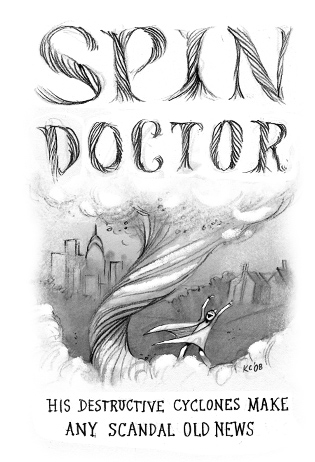
Wag the Dog Movie Review

Wag the Dog was a hilariously clever movie about the guise of politics and the measures that some people will go to "spin" a story to protect their public image. Of course, the area of politics  (and in this case, the presidential election) is one that constantly under public scrutiny, especially in the United States where candidates must use their public image to secure votes from the American people. And candidates have to be very careful to depict themselves favorably, because if you do/say something, or act in such a way that the majority disagrees or finds what you do offensive or disappointing, you'll be on your way out! In the film, we see spin-doctor Conrad Bream (Robert DeNiro) and his team (including Anne Heche, Denis Leary, William H. Macy and Dustin Hoffman) concoct a plan to distract the public's attention from their candidate's alleged nefarious sex scandal by hiring a movie producer (Hoffman) to create a fake war with Albania. With all of the smoke and mirrors at their disposal, an effective distraction to the scandal is created, but then things get misconstrued and the movie ends up in a confusing mess of what is real, and what appears to be real.


This film surprised me, partially because I couldn't predict what it would be about based upon the title. Later, after watching the film and thinking about  how the plot could tie into the title, I remembered the caption at the beginning of the film:


Why does the dog wag its tail?
Because the dog is smarter than the tail.
If the tail were smarter, it would wag the dog.


Now, according to a little research that I conducted on that phrase, it means "a minor or secondary part of something controlling the whole." (Wikipedia). After reading about this, I began to understand the message that I think the director wanted to convey. In Wag the Dog, the minor or secondary part is Conrad Bream's team, who take control of the whole (the American voting public) in order to sidestep a scandal that could ruin the presidential candidate's shot for office. I think the director wanted to show how easily the media can mislead the public, especially because we rely upon and tend to naively trust the media for information. The fake war with Albania was created to distract from another (real) disaster to the candidate's campaign, and people seemed to believe it. At least for a while. The whole film just made me think about how easily I might be convinced to believe something untrue about anything, in this case a presidential candidate. What we perceive to be true may be a complete lie, and the film's director shows us with Wag the Dog just how easily that can happen.


I think this movie means to depict the people of Albania as down trodden and helpless, which they of course had to do to make people think that an actual war was going on there. I suppose one could assume that the few minorities in the film mean that they were irrelevant to the plot. I did not observe any instances where minorities were degraded or deliberately eliminated. The film director, Barry Levinson, however, is Jewish. Dustin Hoffman is from a Jewish family, but he was not brought up in any particular religious orientation, so I suppose he is "ethnically" Jewish, but not religiously. I am not sure if this had anything to do with the role he portrayed; I am just looking for ways to tie in the director's background with movie features. It may also be noted that Levinson has worked with Hoffman in other movies,  such as Rainman (1988) and in Tootsie (1982) however, he was un-credited.


People who are from different backgrounds probably wouldn't have to much of a problem with film, in terms of misinterpretation. Albanians may be offended by the choice to use their country in the ruse of a fake war, which may cause others to view them as helpless and unable to protect themselves.


The movie added to my visual literacy by introducing me to the reality that much of what we see in the media is fabricated and untrue. Now, I know that everything I see on TV is not real or true, but I didn't think about the campaigns I see government officials and hopeful elects as being complete lies. Wag the Dog showed me how it is so easy to spin things in one's favor, and to unfairly cover a mistake up with a bigger story to de-emphasize it. I don't follow politics as closely as some others, but I like to think that I educate myself pretty well when elections are at hand. The plot included details of what kind of artistic means that people might use to generate and carry out their fictitious creation. The movie producer had all kinds of tricks up his sleeve, he was a very powerful character in the movie. Initially I thought Dustin Hoffman's character wouldn't be too important., but as a movie producer, he had the resources needed to create an entire smoke screen using clever distractions and effects to really draw attention away from the presidential candidate's sex scandal. In the end, when Hoffman orders Bream killed and makes it look like he had a heart-attack, that shows how events can be twisted to seem to be what they are not. The movie made me feel like I have to be extra wary with my judgements, to not just think the first thing that pops into my head when I see something about a candidate on television, created by their campaign. They could be "wagging the dog" ;)

Thursday, March 22, 2012

Introductory Preso Experience

For my introduction in CCA, I decided to make a video to show the class who I am, and what I'm all about. I wanted to share with everyone what I find most important, what I like to do, and why I wanted to be a teacher. If they are able to understand who I am and what makes me "tick," we might be able to establish common ground between one another. I learned a lot from my classmates' presentations, and saw many different and creative ways of presenting ourselves. In CCA, we have to work in groups often, and making sure that we understand each other and get to know each other will help promote a good environment for collaboration.


Creating my video didn't take too long, I planned what I was going to say by typing up a script. It wasn't much, just things like where I was born, where I grew up, info about my family, my hobbies, and what I wanted to do as a teacher. I recorded myself speaking, kind of like a "talking heads" idea from The Office. I also recorded other frames of me doing different things, like riding a book cart at my job, the library, running up stairs (for my intro), my sister, and singing. I think I did a good job conveying who I am to my classmates. Some things have changed a little since my video, but overall I am living my life the same way!

For more Youtube videos of and by me, visit my channel!

Saturday, March 17, 2012

Thank You For Smoking Movie Review

I watched "Thank You For Smoking" the other night, and though I had seen the film before, I was surprised by what I discovered when I watched it again with the knowledge I have gained from Visual Literacy. Besides my love for William H. Macy (he just seems so benevolent! Although not necessarily in this role), I wanted to look at the plot and elements of this movie to see what I could connect with our perception today.


I think the director (Jason Reitman) of this movie wanted to point out how different points of view can really make a topic dynamic and complicated. The character Nick Naylor is a lobbyist for big tobacco, and vice-president for the "Academy of Tobacco Studies." Throughout the film, Nick is constantly defending Big Tobacco and going head-to-head with those opposed, arguing that people have the right to choose whether or not they want to smoke, that it is not the fault of Big Tobacco that smoking is killing, it is the smokers' own problems. Now, for Nick Naylor, being a tobacco lobbyist is "just a way to pay the mortgage." I think this is interested because if you look at a job like Nick's from this perspective, it really is just a job. However, Nick's perception of his job is different than those of people who have lost loved ones to the ill effects of smoking. It seemed like the director wanted to emphasize how everyone has their own personal take on things, and how easy it is for us to put a "spin" on things to justify our actions and our perspectives. For Nick Naylor, he is doing what he's good at (talking) and supporting his son.


I do not recall very many instances where minority groups are featured. It seemed to me that the characters were primarily white. There is one state official present during the end scene that is African American, and he makes the point that Americans need symbols to look at in order to understand a concept or idea. Other than this individual, I did not see many other minority representations.


The director is Jason Reitman, a Caucasian man who is Canadian. I think his background may have played a role in directing the film, because he seemed to have an interest in the story after reading the book of the same title. Therefore, he had to follow the story line of the book pretty closely, with his own interpretation of some of the action. The elements of the book are there, with Reitman's own "spin" on the characters. I think that Reitman did not necessarily eliminate focus on other ethnicity for person reasons; rather, Reitman was just trying to follow Thank You For Smoking author Christopher Buckley's initial descriptions.


Because of the limited instances of minorities in this film, I think people in these groups may be offended simply by the lack of the groups being in the film. I also think that smokers may misinterpret this movie because of the negativity against those who choose to smoke out of their own will. Throughout the film, the emphasis is on the people's choice to smoke (at least that is what Nick Naylor is always saying), and I think that maybe people who choose to smoke would feel offended that smoking is made out to seem so hated and bad. They may feel even more alienated because of their person choices than they may feel in real life, when attention is not necessarily paid to individual smokers.


There are several notable instances where visual means are used to enhance the film and focus our attention. The introductory credits sequence was done with fonts and graphics meant to imitate those on cigarette packaging. I thought this was a very clever way to show how we can be influenced by visual graphics, especially when people are trying to sell things to us. Also, there is an emphasis on how companies, in this case cigarette companies, use catchy commercials and other means to grab our attention. As the senator of Vermont, William H. Macy's character comments 
"they like to use cartoons and symbols to hook our kids," which is sometimes a very true case. Think of the Marlboro man, the great cowboy figure that was bound to interest children in the 60s and 70s. In movies, actors needed something to do while they were talking, and smoking just seemed like a "natural" thing for them to do. 
Advertisement was born inadvertently through movies! Now today, smoking characters have negative connotations, and they probably should have. These different artistic elements employed by the director made the film even more effective in showing us how advertisements can be easily justified, and how important it is to resist falling into the "spin" and to judge things for ourselves, instead of letting others make decisions for us!


Monday, February 27, 2012

AHA-The Oscars!

Photo-Flickr: Loren Javier
This might be a stretch for a Visual Literacy blog topic, but really think that the Oscars are a big part of our country's visual culture. Though the Internet has certainly changed the face of mass communication in today's society, television and film still play significant roles in people's lives. One of the most celebrated awards in film is the Oscar, and every year the Academy Awards are televised so that America can see who and what wins each award. I would have to think that these awards and the films that essentially compete to receive them are part of our visual literacy. Since the Academy Awards are advertised and broadcast on a prime-time network during prime viewing hours (last night it was 7e/4p), one would assume that the general public finds them to be important. 37.6 million people tuned in to watch the Oscars, and it would have been 37.6 million plus one more if I hadn't had to work last night.

I think that the best film, in terms of visual literacy, this year has to have been The Artist, directed by Michael Hazanavicius. The Artist is a silent film, about a silent film star, George Valentin, who is anxious as to whether or not talking films will put him out of a job. The movie is in black and white, which keeps the focus on the action taking place on the screen. The lack of verbal communication places more emphasis on the visual elements of the film.


If you watch the trailer above, you will notice that the actors are primarily communicating with such dynamic personal visuals as facial expressions, dramatic gestures, and body language, relying completely on nonverbal communication to carry the action. The only verbal communication that occurs comes at the very end of the film. I highly recommend seeing The Artist if you haven't, it's a real treat!

Mary McNamara, a Los Angeles Times Television critic, noted that as the Oscars reoccur every year, numbers are waning. And though the Oscars have become predictable to an extent (the same process happens every year, hosts dramatically opening envelopes, famous people winning awards, giving short speeches, hosts cracking jokes in the mean time), we still love it. Maybe it's the anticipation of seeing the fashion on the red carpet, or the banter between this year's hosts, or the excitement of finding out each winning nominee. For me, it's the chance to catch a glimpse of movies I've missed for the year, to appreciate which actors and actresses have been hard at work to bring imaginative new films to life, and my favorite, seeing which film wins best cinematography! This year, it was Hugo, directed by Martin Scorsese, cinematography Robert Richardson.
Cinemastyles.blogspot.com

I love the Oscars. I try to watch them every year, because I really do think that they encompass the spirit of film. Of course, I might be biased. I am a pretty huge film devotee, and I am a loyal viewer of Turner Classic Movie's 31 days of Oscar.

See all of the nominees and winners of the Oscars 2012 here.