Good morning and happy new year to all of you fine folks out there. Not that any fine folks necessarily read this scatterbrained lady's ramblings, but glad salutations to all of you anyhow. It has been well over a year since I last posted (and that was because I got sick and tired of being TOLD what to write about), and that just isn't fair to my patient blog machine!
So these days (since I graduated from UNI back in December!), I have been waiting for my teaching license and substitute agency materials to be processed. Let me tell you, being unemployed, living with your folks (though I love you G & J), and having no money and therefore no financial freedom, one begins to feel small and helpless. Also, when your boyfriend gets a great new job and is working all the time in Iowa City (which is one of my favorite places), you start to get jealous of everyone else having a place and purpose. Sigh. My day will soon come (I hope!).
And I do mean that. I plan on applying for teaching positions as soon as I can get my resume updated. Which should be fairly easy, since there are all kinds of awesome places these days to get resume help. My students at Clear Creek Amana were working on resumes right before I left, and we were able to find many different sites that would help automatically generate a resume, or give you the tools and the information to manually put one together. (oh yeah, that's where I student taught my 2nd half! Loved my sophomores!) So that, combined with cover letter, portfolio and letters of recommendation should pretty well prepare me for the application process.
Of course then there's the actual interview.... but methinks the outgoing Scholastica will be able to handle that :)
As most of my posts go, we don't really have a set subject going on here. However, my title was New Year? No Fear! I sincerely hope to use this phrase as a sort of mantra for myself in 2013. Being out in the "real world" and in the job search is intimidating, because up until this point I've only been a student! Ironically I have been a student of teaching... and have discovered that it's the only thing I want to do with my life. But there have been obstacles: boyfriend's roommate committed suicide, first cat got run over :(, close friend killed in car accident, a lot of things to really bring me down in 2012. And my spirits and confidence in myself have been affected lately with many feelings of self-doubt. Will I be a good teacher? Do I have what it takes to give students a strong foundation of English language and communication skills?
I've decided to knock of the negativity, self-doubt, and timidity of 2012 (there WAS timidity, some of my friends might not have guessed it) and go for positivity, energy and clarity. I'm sort of going for a lot of zen here. And I'm dragging Colin into it too, because with a new job at his disposal, the possibility for positivity is high!
So wish me luck all, because I think this year looks pretty promising. Let's hope I snag a teaching position in the meantime ;)
Thursday, January 3, 2013

Sunday, April 29, 2012
Visual Literacy in My Life-Today
 |
| http://tinyurl.com/6r836pr |
 |
| Aristotelian Aesthetics |
The movies and our class discussion was another favorite part of Visual Literacy this semester. Everyone in the class had a different perspective to offer when considering issues and visual theories that we encountered. Now when I watch commercials, I always think of Jean Kilbourn's Killing Us Softly, and I am shocked at how many ads contain subtle messages within the visual choices they make. Thinking about this fact, I wonder how I represent myself with my actions and body language. Non-verbal language, and visuals, say so much MORE than words. You know that phrase "actions speak louder than words,"? Well, it is incredibly true, and now more than ever I am tuned into the way visuals communicate in our society.
I had a great time in Visual Literacy this semester, and I will be able to use my knowledge in my future classroom. I just designed a teaching unit focused on Chaucer's The Canterbury Tales. I included an activity that was exclusively about using the visual communicative power of woodcuts in conveying a story. Students have to view different pictures, without seeing the accompanying words, and determine what is happening in the plot. There are lots of resources available out there for connecting medieval literature with art. Thanks to visual literacy, I know I will be more prepared to help students "make the invisible visible," and find deeper meaning from their classroom activities. I want them to look twice, at everything they encounter. Maybe they'll become a famous artist or filmmaker someday, and they can say, "my high school English teacher challenged me to do this." I would be so proud :)
Creating the PBL Learning Lesson

We created our GoogleDoc in order to allow for easy collaboration between the three of us. We decided that it would be great for students to be able to collaborate and create some sort of cartoon or animation to convey the news information to the 3rd graders. At first we wanted a 3-5 minute animation, written at 3rd grade readability, but later we cut it down to 1 minute to make it more feasible to accomplish in one, 75 minute class period. We then explored options for some sort of creative medium for the animation, looking at both Xtranormal and Blabberize. We settled on Blabberize, because Xtranormal seems to be no longer free.
For the RWLD, we sent our students out to three different online news sources, including npr.org, cnn.com, and kwwl.com. We had the class fill out a current event form. This form was a way for students to organize the events they researched, so they could concisely formulate their 3rd-grade reading level news broadcasts. The students then were to use the 3rd grade readability calculator to measure whether or not their broadcast script would be comprehensible by 3rd graders. They also had to watch the Jing video that Aric created, showing the students how to use Blabberize.
Our presentation went very well last Tuesday. We started out our lesson showing students an article that seemed very jargon-filled, to simulate how a 3rd grader might feel while watching the news as-is. Then we asked them to share their articles in their small groups, and work on adapting them to a 3rd grade readability level. All of the student groups created a Blabberize video, using an image of their choice that was age appropriate and would serve the greater purpose of the broadcast. Look at all of scripts and their great Blabberize videos here!
We had a great turn out for Blabberize creations, and it seemed like the students had a lot of fun while making them. My greatest lesson from the project is the importance of communicating and collaborating with your group. Gineal, Aric and I have worked very well this semester within Group Gelastic. For this project, we split up tasks (Gineal made the narrative, Aric made the Jing video, I created the rubric), we all came up with the overall project idea and the RWLDs, and chose the medium that students would use to create (Blabberize). I learned how PBL can really motivate a class to do their best work, because if students know that their creations are serving a higher purpose (helping elementary students learn about current events), they will be more inclined to participate and get something out of the experience. I will definitely look for ways to incorporate PBL in my future classroom!
Creating/Using Podcasts in Education
My group (Gelastic) and I created our podcast around "What to Expect When You're Expecting to Attend UNI." We wanted to offer listeners tips on what to expect in your first year attending the University of Northern Iowa. With this idea in hand, we got started.
First, we planned our script, using GoogleDocs (my favorite). We designated different categories that we wanted to talk about, which were: time management, finances, dorm life, and getting involved. Then we had detailed points within these categories. We split the categories up evenly, as well as the transitions, so that each of us could have a chance to speak in the podcast. We also determined what intro and outro music we were going to use, as well as the track that would run softly in the background throughout the podcast. Writing the script was fun, as well as educational for the three of us, because we've all had slightly different experiences in our time here at UNI. Once we had our script in tact, we planned where and when we would meet to do the recording. We were able to meet one day before CCA and record all of the introduction, conclusion and transitions, as well as my lines, and Gineal and Aric met after CCA to record their parts (I had a class after CCA). After all of our recordings were done, Aric arranged and edited our sound clips using Audacity, and uploaded the final recording to Podbean.
 |
| Got Podcast? |
Through this project, I learned how to further use collaborative tools effectively, as well as how to create and execute the publishing of a podcast. I had never made a podcast before, or really even listened to many, so this project called for me to get out of my familiar comfort zone and venture into relatively unknown territory. I really enjoyed working with my group members, especially in writing our tips and witty script! In my future teaching career, I can see myself employing this technology and type of project in the classroom. Podcasts required planning and organization, so it would be a great way to also help students practice these skills (adolescents may benefit from the additional practice!). Overall, I had a lot of fun working with my group and creating this podcast. I've also got a new interest in the media, and have already downloaded several from iTunes U onto my i-Phone!
Visting Lincoln Elementary School
When we visited Lincoln Elementary School, I did not know what to expect. I am not an elementary education major, so my focus has never really been on elementary environments. Usually when I think about using technology and collaborative tools in the classroom, I am thinking of a high school classroom; however, the day we visited Lincoln, my attitude immediately changed.
The children at Lincoln are very privileged to have Colleen Nelson as a teacher-librarian at the school. Ms. Nelson showed us around the building and high-lighted different areas that are using technology to help students learn and communicate. One classroom of students were using I-pods for vocabulary practice, as well as spelling work. Several other students were using desktop computers to work through reading, language and vocabulary. These were 3rd graders, and they would work through "stations" during the day to practice various skills. I thought the 3rd grade classroom was the most interested, because of these stations. The students would be rotating through different activities, using computers, I-pods, and regular, non-technological activities, to practice all kinds of skills. What I really liked about this classroom was that there was a huge emphasis on using various reading strategies, including schema, questioning, visualizing, monitoring and fix-up, and inferring. As a future English and reading teacher (and I will be endorsed 5-12, so I may very well teach elementary), it is SO exciting to see what real students are doing in classrooms today.
The trip to Lincoln changed my thinking about elementary schools and students. Even though these kids are young, they have a lot of potential for creativity and understanding, and using technology and collaborative tools is helping them to think more deeply about the subjects they're learning about. I'll think twice the next time before I make assumptions about elementary kids!
This video shows other examples of how technology is changing the way elementary kids do school!
 |
| Ms. Nelson showing us the i-Pods |
 |
| Students on classroom computers |

 |
| 3rd graders reading during stations |
The children at Lincoln are very privileged to have Colleen Nelson as a teacher-librarian at the school. Ms. Nelson showed us around the building and high-lighted different areas that are using technology to help students learn and communicate. One classroom of students were using I-pods for vocabulary practice, as well as spelling work. Several other students were using desktop computers to work through reading, language and vocabulary. These were 3rd graders, and they would work through "stations" during the day to practice various skills. I thought the 3rd grade classroom was the most interested, because of these stations. The students would be rotating through different activities, using computers, I-pods, and regular, non-technological activities, to practice all kinds of skills. What I really liked about this classroom was that there was a huge emphasis on using various reading strategies, including schema, questioning, visualizing, monitoring and fix-up, and inferring. As a future English and reading teacher (and I will be endorsed 5-12, so I may very well teach elementary), it is SO exciting to see what real students are doing in classrooms today.
The trip to Lincoln changed my thinking about elementary schools and students. Even though these kids are young, they have a lot of potential for creativity and understanding, and using technology and collaborative tools is helping them to think more deeply about the subjects they're learning about. I'll think twice the next time before I make assumptions about elementary kids!
This video shows other examples of how technology is changing the way elementary kids do school!
Collaborative Tools
 For our first project in CCA, we had to work in groups to make a google doc about collaboration. The rule was that we had to create a complete project without speaking face to face. This might have seemed like a difficult task, because we are so used to live, in-person communication within our classes. However, we did not panic. With all the collaborative tools available out there, we could be in different places and still communicate with each other at the same time! As soon as Dr. Z gave us the go-ahead, we had to close our mouths and turn on our computers.
But I'll focus on our collaborative research project in another post. For this post, I want to focus on the tools. Collaborative tools have radically changed the way we do school, business, and personal communication. Never before have we had such ease with which we may create, edit, share and publish so freely. Being a future-teacher, having a platform that makes communication and collaboration so easy is crucial to making education its best. Let me tell you about a few of my favorite collaborative tools.

 Another really nice collaborative tool is Skype. I have used Skype for a couple of years now, because we have family in England who we like to see from time to time. I was amazed at how easy it is to use, and the basic service (hosting two people live-chatting with video) is free. You can even have more than two people meet on Skype, with audio only. We used Skype for our collaborative research project, and it was a breeze. We even Skyped with Dr. Z when he was in Jordan! In a week, my boyfriend leaves for Berlin, Germany, and we have already downloaded Skype onto his netbook, checked out the time difference between Berlin and Iowa, and made a schedule of Skype "dates." Without this technology, I wouldn't be able to keep in touch with a lot of important people!
Other collaborative tools I have used include: Prezi (we're using it for Visual Literacy right now), Just Paste It, Second Life (this is pretty collaborative, in that you can talk to people from all over the world in a digital 3-d setting, and it's fun!), Dropbox, Wikispaces (both in Z's class, Ping's class, Magda's class, and more), and Chatzy. And I know that once I secure a teaching job (fingers crossed people!), I'll be investigating even more tools to use in my classroom!
Here is a table of online collaborative tools available to users for free at Cool Tools for Schools.
And 15 more free tools for Web-based education and collaboration!
Thursday, April 26, 2012
Crash Movie Review
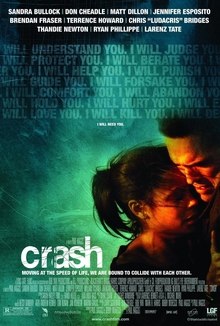
1. I think the director's message is simple: there is racism and prejudice hidden in the most unexpected of places. Unfortunately, though our world is continually becoming more global and diverse, there are individuals who are resistant to the harmony that our world hopes to achieve. Through exposing how race seems to be such a sensitive issue, and how people often aren't what they seem, I think the director really wanted to emphasize how sometimes we bring these issues to light, just so we can feel human. Just so we can understand that everyone has similar needs, wants and feelings, no matter what we look like.
2. I think that the movie has depictions of minorities that promote the message of the movie. There are very obvious instances of stereotypes that exist within the film, including Sandra Bullock's character, the white, racist woman, as well as the two African American men who are depicted as "tough" and steal a car, the Persian man who is angry, and the white gun shop owner who distrusts him. Several other depictions feel earnest, including Don Cheadle's character Graham Waters and his partner, Ria. The whole movie is organized around individuals applying stereotypes towards others. To support the director's intended message, that we are all interwoven without even realizing it, and we often "crash" into people we don't expect to, I think the minorities were situational.
3. I think the director's professional and educational background played a role in directing Crash. Since this film has kind of a subtle message, and presents it in an artistic way. Paul Haggis was very influenced by the films of Alfred Hitchcock and Jean-Luc Godard, both notorious for creating iconic, striking films. I think that Crash falls into a similar category. It is memorable, and deals with serious issues in a dynamic, yet subtle way.
4. I would hope that individuals watching this film would understand its message of inter-woven lives, and not be offended by the medium and characters used to convey it. However, I think that African Americans, people from the Middle East, and Asian people might be offended, because some of their minority groups are depicted stereotypically and thus negatively.
5. The movie added to my visual literacy by challenging my perceptive powers. Since so many of the characters' lives intersect throughout the film, (and there are a lot of characters, whose stories all have something to add to each other), I had to continually update my idea of each character, when I gained new information about them. I think we can use this type of perceptive update in our everyday lives, by reminding ourselves that no matter who a person is, we never know when their life might "crash" into our own.
6. Like Jean-Luc Godard and Alfred Hitchcock, Paul Haggis employs subtle visual means to convey the message of how people's separate lives "crash" into each other sometimes. By the recurrence of characters encountering one another, and different events causing "domino effects," this causes viewers to have to recall their initial perceptions of characters and compare them to how said characters are represented throughout the film.
Creating the Collaborative Research Project-Curfew Laws
 |
| http://www.peoplesfreespace.org/vision.html |
When we were first assigned the Collaborative Research Project, we knew we wanted to connect both of our teaching major emphases: Gineal and Aric's Social Studies major, and my English major. Of course, Dr. Z being Dr. Z, he threw down the gauntlet and challenged us to complete this project without speaking to each other in person. For Aric and I, this challenge seemed very difficult initially, because we both love to talk, and we're pretty boisterous. So, we knew we had to choose a collaborative technology that would allow us to communicate quickly and clearly, so we could effectively plan and carry out our project. How were we going to agree on a topic that related to both Social Studies and English skills, all without TALKING???!
The final agreement fell on an idea that the three of us concocted together. Teenagers like to stay out and have fun, but often there are city, town, or community curfews requiring those under a certain age to be home and inside by a certain time of night. We wanted to pose the question: are you for or against an age-based curfew for your neighborhood? Students would then have to argue for their side, in a debate video. They would receive feedback from us instructors, and their peers, through a YouTube comment thread. All of this encouraged collaboration as well.
 |
| http://www.nlondtwp.com/GenInfo/Ordinances/Chp55Curfew.html |
During our Skype sessions, Gineal, Aric and I would meet on Skype, conference calling, and we would also have a GoogleDoc open. We shared this GoogleDoc so that we could record all of the ideas that we discussed in our Skype call. If you haven't ever used GoogleDocs before, they are THE GREATEST THINGS EVER! Seriously, I think this semester has made me fall in absolute love with GoogleDocs. I feel like I'm being extremely unfaithful to Microsoft Word. Don't tell Bill...
I learned that collaboration is immensely important, and can be very easy to accomplish. My group and I created a clever project using simple methods of communication. Through this project, I became more familiar with GoogleDocs, Skype, and got to know my group members better. For a list of suggestions when considering collaborative tools to use, visit Six Revisions. I hope my readers get out there and explore the great big world of online collaboration! You might just find a new tool, with a use that really surprises you!
Global Learning Experience-Flat Classroom Project
 |
| http://www.flatclassroomproject.org/ |
I LOVED my role in FCP. The students I was involved with were in the project to win, or at least connect personally with the project and really put in great effort. Our topic was Web 2.0 and how it has helped to flatten the world, particularly on the social spectrum. I helped to guide my team when they were editing their wiki, through comments and suggestions about information accuracy, organization, and grammar, usage and mechanics. I felt very proud for being an expert advisor to my group, because they really wowed me with how much they knew about how Web 2.0 has played a role in globalization. This was such a validating experience because I got to see how the students responded to my comments, and how they really looked at me as an expert to give them advice and tips on how to make their project even better.
During the judging portion of the experience, I got to judge many final videos (none from my team) and give feedback and comments to the students. This was SO awesome, because the range of approaches that students took in making the videos shows an immense array of creativity. Some groups played it relatively safe with their video approach, simply explaining how the flattener related to the world generally. Other groups used real-life examples of what globalization is accomplishing, like the first place winner here:
First Place
Title of video: 4.E.3 The Changing Shape of Information: Group Stories
Emily W Masco, Boxford, MA United States
Judges comments: "You chose an excellent topic on which to construct your video. I was very impressed with the level of editing and organization, as well as the content itself. The focus on the Arab Springs situation was a perfect example of how uploading has become prevalent all over the world today. You really took the global perspective to a higher degree, and did a very good job with your information." and "The student chose to apply her understanding of the importance of uploading to things happening on a global scale. Not only did the student inform the audience of the power of uploading in social media, she informed us of the power that uploading and global connections hold in very dire situations." Alison Leytem
I was a judge for the winning video, and my comment was featured on the FCP 11-3 webpage. You can watch Emily's video, and all the other winning videos from the FCP I participated in here: http://www.flatclassroomproject.net/fcp-11-3-award-winners.html
Flat Classroom Project showed me how enthusiastic students seem to be about the opportunity to collaborate with other students around the world on a collective endeavor. I was so proud of my group, and of all of the students who participated. They showed me how global education is capable of bringing different people together to create a real project, a real movement, and a real change.
Global Learning's Effect on Education
 |
| http://borderbuster.blogspot.com |
Global learning is connecting us. We are living in a contemporary world, and we live and interact freely within a globalized setting. Instead of being limited to learning about domestic issues in our classrooms, from a single common perspective, global education gives students the opportunity to reflect upon issues within a larger, interconnected society. They can have the chance to understand the relationships of common social, political and economic issues between different areas of the world. To make an analogy, instead of swimming in a kiddie pool, those learning in a global educational environment are swimming in the ocean!
The Maastricht Global Education declaration (2002) defines global education in two ways"
"Global education is education that opens people's eyes and minds to the realities of the globalized world and awakens them to bring about a world of greater justice, equity and Human Rights for all."
"Global education is understood to encompass Development Education, Human Rights Education, Education for Sustainability, Education for Peace and Conflict Prevention and Intercultural Education being the global dimension of Education for Citizenship."
What global education is doing is knocking down the walls and barriers that used to exist because of distance between countries and areas of the world. By approaching education from a global standpoint, we can create a partnership between different people, cultures, and religions on both the large and small scale. Transformative learning can happen, and students can approach problem solving with more than themselves in mind. They can look at our whole world, rather than their world.
Vicki Davis and Julie Lindsay have done wonders in the area of global education with their Flat Classroom project. You can read more about the Flat Classroom Project here.http://www.flatclassroomproject.org/ Davis and Lindsay have students consider the 10 "flatteners" discusses by Thomas Friedman in his book, The World is Flat. By focusing on how the world is becoming further globalized, students can reflect on their own contributions to the global social, political and economic spectrum.
Global learning is effecting education by posing new expectations from students today. In our contemporary society, new technology is placing us only a few keystrokes and clicks away from connecting with someone completely new, from somewhere far distant from us. It is now even more important to understand cultures other than our own, so that we may all work collectively to promote a better world for future generations. Dr. Merry Merryfield from Outreach World (a website for teaching students about the world) notes that global education stemmed from international studies. We wanted to help young people learn about other cultures, and it has just exploded and now we focus on connecting people and promoting a harmonious mission.
I think that global education has enriched my learning experience. Where do you think global education has taken, or will take you?
AHA! The Bro Code
 |
| Barney Stinson wants YOU to be a "bro" |
As described by Frosty the Flowman, an Urbandictionary contributor, a bro is:
Found primarily in the northeast and deep south, a bro is typically a white male from a wealthy background who enjoys excessive drinking and partying, sports (especially lacrosse), and music (usually underground rap (wiz khalifa, oncue), alternative (kings of leon, DMB), and techno) Bro's dress differently depending upon the region they live in, but the main elements include polo ralph lauren, sperry's, and designer sunglasses (costa del mars, ray bans). Bro's use the college they attend or attended as status symbols and most Bro's post-college can be found in the financial business. Bro's are considered to be extremely success oriented and their aggressiveness in life tends to anger several other societal groups (see hipsters).
Bros can be found in the majority of the male characters in Wedding Crashers, anybody who plays lacrosse, or Stifler from American Pie.
This
is just one definition out of many pages of contributors. While I do not know
how to concisely describe my own definition of this stereotype, I do know how
to identify the type of individuals within the group.
The
video highlighted the subculture of "bros," and how contemporary
culture encourages the creation of sexist men. Paul Kivel, a Violence
Prevention Educator, called it "An excellent education tool for classroom
discussions about male socialization and the impact of media and pornography on
men and women around them."
When
we have websites promoting this cultural group's sexist mentality (sites such
as http://www.brobible.com/, http://www.broslikethissite.com/), along with reality
television shows like Jersey Shore, The Hills,
and others that promote wild partying and derogatory behavior from men and
women, shouldn't we be concerned? Is humanity really meant to enjoy acting in a
way that inappropriately portrays people to be meaningless?
As
a pre-service teacher, the well-being of my students is extremely important to
me. I don't want them to fall victim to playing into a subculture that makes
such offensive behavior towards other men and women seem ok.
|
AHA-1 in 4 Homeless are Veterans

Today, we learned about the veterans in America who are homeless. Veterans have fought hard to keep our country safe and secure, yet many of them are without homes, because they are injured and cannot work or keep jobs to pay for housing. We watched a video about a homeless veteran, and it was very sad to watch a grown man who has worked so hard, go without. The group presenters showed us different organizations connected with the United States Department of Veterans Affairs, and among these organizations, there are many places to help homeless veterans. I learned that 1 in 4 homeless persons are veterans, and this is a very sad statistic. Being those who have worked hard to protect our home, the United States of America, shouldn't ALL veterans be guaranteed a safe and comfortable home?
I decided to research the Veteran Justice Outreach Initiative, a program that helps to eliminate the unnecessary criminalization of mental illness and extended incarceration among Veterans. The program will do this by ensuring that Veterans who struggle with mental illness or substance abuse are given adequate medical attention and services before they are released. A lot of individuals who have fought in wars suffer from mental illnesses, especially Post Traumatic Stress Disorder. It makes me very sad to think that some Veterans end up homeless because they needed more recovery and rehabilitation time, and are not given it. The VJO helps ensure that these Veterans get the time and access they need to services, so they have a better chance of re-incorporating themselves into society. My poster includes the organization's name (Veteran Justice Outreach Initiative), the three things that it sets out to do (in white), as well as contact information for the two program directors. I also included the url, in case readers want to visit the VJO site.
This organization will help Veterans by extending extra medical attention and care to those who need mental health services. I think that knowing about it will also help change our perceptions about homeless Veterans. This poster is a visual that was created to spread awareness about a program that is helping homeless Veterans around the United States. I hope that others will reconsider what they think when they see these homeless individuals, because they are not just "some bums" looking for easy money. They fought for us. Now let's fight for them.
Saturday, April 21, 2012
Visiting Price Laboratory School for Research & Development
 |
| thegazette.com |
Even though laptops seem "old school" in terms of tools in school (the One-to-One initiatives have been going on for a while now, and many schools have adopted the program and continue to do so), they can still be seen as an important enrichment tool for the classroom. The students I observed at NU and PLS were more engaged in their lessons because of the computers. I also was impressed by the collective camaraderie between students. There was one student who was having trouble configuring her equations and setting up the calculations on her device. Several other students in the classroom talked her through the steps, in order to help her, and she finished fairly quickly because of their assistance. I was astounded by how friendly and willing to help each other these students were! The visit really made an impression on me, in terms of how technology can make the smallest transformations in the classroom, yet have a really big impact.
Boundless Playgrounds!
 |
| My Boundless Playground, created with Google SketchUp |
I focused on equipment that was lower to the ground, with both ramps and stairs so that all children could access, no matter what their mobility status was. I also tried to include activities that were part of the landscape (the hop-scotch area, the swirl path, the sandbox with entrance/exit ramp), so that kids would have other options to play, besides just the equipment. If I had more time, I would work to design some climbing equipment that was low to the ground, with soft foam chips underneath so that if children would let go of the bars, they would have a safe and short fall. Using SketchUp made this project seem more real, which I think could be really effective to use with older students. I think using this software with elementary students would be very difficult though, because it is a little hard to learn at first. The Reading Brigade's idea was awesome, and I think it would be well-suited for secondary students to use, perhaps in conjunction with elementary students. It could be a combined learning effort, where elementary students help design the Boundless Playgrounds, and high school students manipulate the SketchUp tools to make it happen.
Great job Reading Brigade!
Tuesday, April 17, 2012
Glogster Project-Morgan & Blake
 My second cousins Morgan and Blake Mcdermott were both diagnosed with MPS III Sanfilippo syndrome. MPS (mucopolysaccharidoses) III Sanfilippo syndrome is a genetic lysosomal storage disease. It is caused by the body's inability to produce specific enzymes. Sanfilippo syndrome specifically prevents the body from properly breaking down long chains of sugar molecules (glycosaminoglycans). The disease is typically diagnosed when children are very young, and as they age, learning ability declines and mental status deteriorates. Both Morgan and Blake started out as functional babies and toddlers, but as the disease took hold, both began to degenerate neurologically.
I love my little cousins very much, as well as their parents Mike and Jill. They have been fighting for over 3 years to cope with the disease, as well as raise awareness and connect with other families across the nation who also have children with MPS. There is currently no treatment for MPS III, but we are fighting every day to find a cure.
I made this Glogster in dedication to Morgen and Blake. I hope that someday soon, we can find a cure to help them live out their lives in the best way possible. M and B, I love you guys!
Here is a link to my Glog that I created: Morgan & Blake
Monday, April 2, 2012
AHA! Happy Birthday Juan Gris!
 |
| Google doodle, inspired by Gris |
Gris was part of the art movement known as Cubism. Cubism is a 20th century avant-garde are movement. It was pioneered by artists like Pablo Picasso, who may be the most notable Cubist of the movement. In Cubist art, the concrete images are broken up, they are analyzed and examined, then put back together again with an emphasis on the abstract form, whatever it may end up being. "Instead of depicting objects from one viewpoint, the artist depicts the subject from a multitude of viewpoints to represent the subject in a greater context," (Wikipedia). This emphasis on the presence and persistence of multiple perspectives might be what makes Cubism so unique, and also what makes it more pleasing and entertaining to those who view Cubist art. In fact, it might be safe to say that abstract are is more fitted for interpretation and discussion, because of its ability to be seen from multiple perspectives. I personally enjoy abstract art due to the fact that I can look at different paintings, photographs and images and judge what I see for myself.
Look at these two paintings:
 |
| Whistler's Mother |
 |
| Violin and Glass by Juan Gris |
The second is a painting by Juan Gris, the artist to whom Google dedicated their Google doodle. What do you see in this painting? Is there any concrete image that can be deciphered from the Cubism with which the painting has been created? I see a lamp floating over some furniture that has been upset in a fancy living room. Or, I only focus on the jumble of elements that suggest this painting is about music (because of the forte symbol in the center of the painting). Now, the name of this painting is actually "Violin and Glass." Would you have guessed that if you had been given more of a context for the painting? Is there anything in the painting (besides the forte symbol) that suggests this would be about a violin? Where is the glass? Do you see how this painting, in its Cubism, has been rearranged to become something new, yet is still reminiscent of the original image?
Cubism, and abstract art in general, allows for us to look at images from multiple perspectives, relying upon our own perception and knowledge of the world in order to interpret what it is. Something we can learn about visual literacy from abstract art, Cubism, and Juan Gris, is that images sometimes do not seem to be what they actually represent. Therefore, we always need to have an open mind for perception in order to really "figure out" the images we encounter, both in art and in everyday life.
AHA! Life on the Screen: George Lucas on Education
 |
| George Lucas |
George Lucas explains that he was "an average student who daydreamed a lot," a description that might describe many of the students in our education system today. Perhaps it wasn't that Lucas was uninterested in the things he was being taught, rather, he was uninterested in the way in which such things were taught. This memory of his past has inspired Lucas to promote a new way of learning that emphasizes students' need to succeed in a visual, digital world. Today's students are used to a faster-paced society, and so they are more interested in learning things when they are made more relevant to the things they know. "They need to understand a new language of expression," says Lucas, which means that students want to be taught in such a way that they are using today's tools, rather than antiquated styles of learning.
 |
| Wordle of Media |
In terms of the future, I think that we need to take Lucas's words to heart, and really reconsider how we're approaching the development of our visual literacy, both inside the classroom and out. Do we learn more about visual literacy from our daily lives? For now I think we do, but that may be subject to change in the coming years. If Lucas's hopes are fulfilled, we're going to have to start trying harder. "Nothing is accomplished through conquest. Everything is accomplished through education," (George Lucas, 2004).
Sunday, April 1, 2012
AHA! No Reservations Mr. Bourdain...
Tonight I was watching the Travel channel (as I often do), and after a while, No Reservations with Anthony Bourdain came on. I love this show and I've seen it a lot, not only because I love food and travel, but because Tony Bourdain (the fox that he is) always takes us viewers to the most unexpected, yet interesting places. I never thought of it before tonight, but No Reservations is a show that is about more than just awesome food and a handsome host, it's about going to these different places and learning about them. The people, the place, the culture that has been created and maintained in these places, these are the things that Tony Bourdain shows viewers on the show.
Sometimes the image that we hold in our heads about places like Rajasthan, India; Mozambique, Africa; the Malaysian jungle, or other areas we might assume to be "third world" and/or unfortunate, or even just vastly different is not as true as we might think it is. Every episode of No Reservations has Tony visiting a different place, and every place he visits I find myself changing my initial idea and perception. He really tries to focus on the people and the way that they do things, the way that they cook. What I like about No Reservations is that Tony emphasizes how beautiful it is to think about things from another perspective. He has said: "anytime you walk in another person's shoes, the world is a better place," and I think that this old adage is one of the most valuable things we can remember about humanity itself.
Now, instead of just looking at the different places on the Travel channel and thinking "I wish I could help those people improve their situations" or that my culture and my experience in life is "better" or more "ideal," I try to see more deeply. I look at the different cultures and customs the people have and I marvel at how diverse humanity is. It may sound silly, but I have learned to put myself alongside Tony and to look for the unique, the unexpected and the things that define a people.
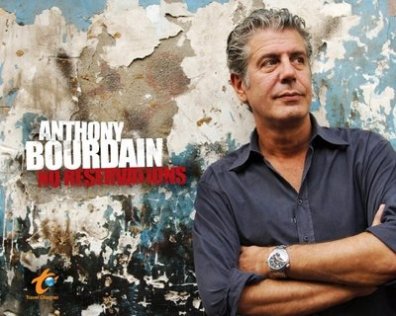 |
| He is just too foxy. |
Sometimes the image that we hold in our heads about places like Rajasthan, India; Mozambique, Africa; the Malaysian jungle, or other areas we might assume to be "third world" and/or unfortunate, or even just vastly different is not as true as we might think it is. Every episode of No Reservations has Tony visiting a different place, and every place he visits I find myself changing my initial idea and perception. He really tries to focus on the people and the way that they do things, the way that they cook. What I like about No Reservations is that Tony emphasizes how beautiful it is to think about things from another perspective. He has said: "anytime you walk in another person's shoes, the world is a better place," and I think that this old adage is one of the most valuable things we can remember about humanity itself.
Now, instead of just looking at the different places on the Travel channel and thinking "I wish I could help those people improve their situations" or that my culture and my experience in life is "better" or more "ideal," I try to see more deeply. I look at the different cultures and customs the people have and I marvel at how diverse humanity is. It may sound silly, but I have learned to put myself alongside Tony and to look for the unique, the unexpected and the things that define a people.
Saturday, March 31, 2012
Wag the Dog Movie Review
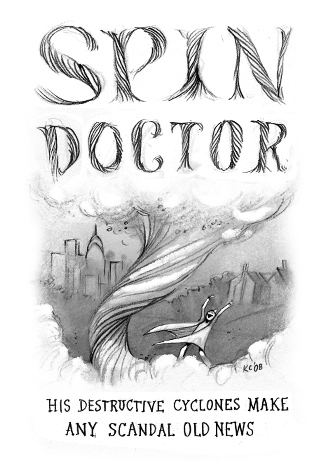
This film surprised me, partially because I couldn't predict what it would be about based upon the title. Later, after watching the film and thinking about how the plot could tie into the title, I remembered the caption at the beginning of the film:
Why does the dog wag its tail?
Because the dog is smarter than the tail.
If the tail were smarter, it would wag the dog.
Now, according to a little research that I conducted on that phrase, it means "a minor or secondary part of something controlling the whole." (Wikipedia). After reading about this, I began to understand the message that I think the director wanted to convey. In Wag the Dog, the minor or secondary part is Conrad Bream's team, who take control of the whole (the American voting public) in order to sidestep a scandal that could ruin the presidential candidate's shot for office. I think the director wanted to show how easily the media can mislead the public, especially because we rely upon and tend to naively trust the media for information. The fake war with Albania was created to distract from another (real) disaster to the candidate's campaign, and people seemed to believe it. At least for a while. The whole film just made me think about how easily I might be convinced to believe something untrue about anything, in this case a presidential candidate. What we perceive to be true may be a complete lie, and the film's director shows us with Wag the Dog just how easily that can happen.
I think this movie means to depict the people of Albania as down trodden and helpless, which they of course had to do to make people think that an actual war was going on there. I suppose one could assume that the few minorities in the film mean that they were irrelevant to the plot. I did not observe any instances where minorities were degraded or deliberately eliminated. The film director, Barry Levinson, however, is Jewish. Dustin Hoffman is from a Jewish family, but he was not brought up in any particular religious orientation, so I suppose he is "ethnically" Jewish, but not religiously. I am not sure if this had anything to do with the role he portrayed; I am just looking for ways to tie in the director's background with movie features. It may also be noted that Levinson has worked with Hoffman in other movies, such as Rainman (1988) and in Tootsie (1982) however, he was un-credited.
People who are from different backgrounds probably wouldn't have to much of a problem with film, in terms of misinterpretation. Albanians may be offended by the choice to use their country in the ruse of a fake war, which may cause others to view them as helpless and unable to protect themselves.
The movie added to my visual literacy by introducing me to the reality that much of what we see in the media is fabricated and untrue. Now, I know that everything I see on TV is not real or true, but I didn't think about the campaigns I see government officials and hopeful elects as being complete lies. Wag the Dog showed me how it is so easy to spin things in one's favor, and to unfairly cover a mistake up with a bigger story to de-emphasize it. I don't follow politics as closely as some others, but I like to think that I educate myself pretty well when elections are at hand. The plot included details of what kind of artistic means that people might use to generate and carry out their fictitious creation. The movie producer had all kinds of tricks up his sleeve, he was a very powerful character in the movie. Initially I thought Dustin Hoffman's character wouldn't be too important., but as a movie producer, he had the resources needed to create an entire smoke screen using clever distractions and effects to really draw attention away from the presidential candidate's sex scandal. In the end, when Hoffman orders Bream killed and makes it look like he had a heart-attack, that shows how events can be twisted to seem to be what they are not. The movie made me feel like I have to be extra wary with my judgements, to not just think the first thing that pops into my head when I see something about a candidate on television, created by their campaign. They could be "wagging the dog" ;)
Thursday, March 22, 2012
Introductory Preso Experience
For my introduction in CCA, I decided to make a video to show the class who I am, and what I'm all about. I wanted to share with everyone what I find most important, what I like to do, and why I wanted to be a teacher. If they are able to understand who I am and what makes me "tick," we might be able to establish common ground between one another. I learned a lot from my classmates' presentations, and saw many different and creative ways of presenting ourselves. In CCA, we have to work in groups often, and making sure that we understand each other and get to know each other will help promote a good environment for collaboration.
Creating my video didn't take too long, I planned what I was going to say by typing up a script. It wasn't much, just things like where I was born, where I grew up, info about my family, my hobbies, and what I wanted to do as a teacher. I recorded myself speaking, kind of like a "talking heads" idea from The Office. I also recorded other frames of me doing different things, like riding a book cart at my job, the library, running up stairs (for my intro), my sister, and singing. I think I did a good job conveying who I am to my classmates. Some things have changed a little since my video, but overall I am living my life the same way!
For more Youtube videos of and by me, visit my channel!
Subscribe to:
Posts (Atom)